




Welcome to gochengdu.cn!
You need to accept our privacy and cookie policy to continue to browse our website. You can change your cookie settings through your browser.

On April 5, 2026, Heba, a 49-year-old Egyptian patient, arrived in Chengdu from Cairo and was admitted to the Liver Transplant Center of West China Hospital, Sichuan University. She had previously been diagnosed with pancreatic cancer in Alexandria, Egypt. After several cycles of chemotherapy yielded unsatisfactory outcomes, two local hospitals refused to operate, citing the high difficulty and risk of the surgery. Referred by Ahmed Elgendi, Director of the Department of Hepatobiliary and Pancreatic Surgery at the Faculty of Medicine, Alexandria University, she came to West China Hospital for treatment, with a final glimmer of hope.
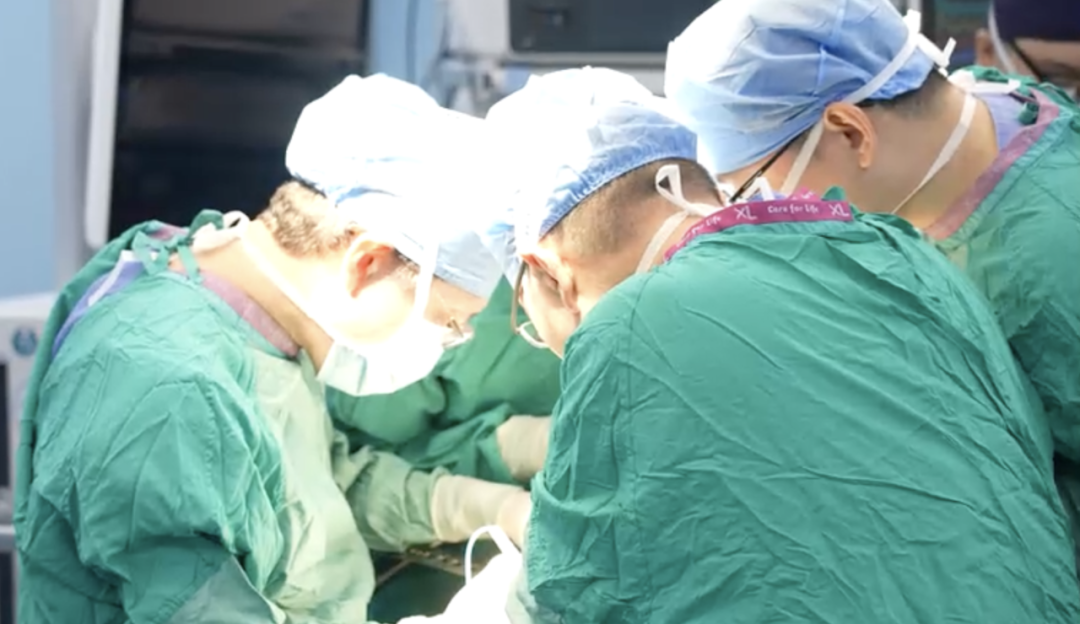
On April 16, Professor Wu Hong and his team from the Liver Transplant Center of West China Hospital, Sichuan University performed a successful six-hour surgery on Heba, involving a total pancreatectomy, duodenectomy, and portal vein reconstruction.
Before her discharge, Heba said, “West China Hospital of Sichuan University has given me a second lease on life.”
Dr. Ahmed Elgendi’s referral was rooted in his trust in West China Hospital—a trust forged through years of medical cooperation between the hospital and Egypt.
Annual Visits for Four Consecutive Years
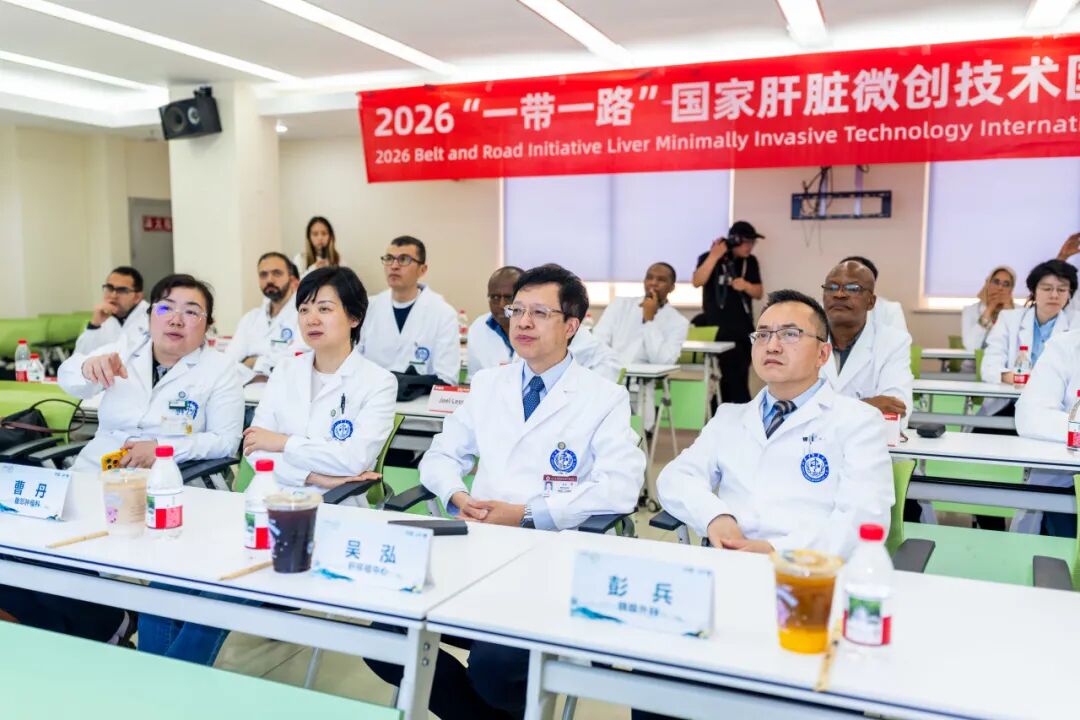
In April 2023, the Belt and Road Initiative Liver Minimally Invasive Technology International Training Course was launched at West China Hospital. The inaugural session brought together 30 young and middle-aged hepatobiliary surgeons from 16 countries, and Ahmed was among them.
During the three-week training, domestic and international experts conducted 22 intensive live surgical demonstrations. The program also included six laparoscopic simulation training sessions, one laparoscopic animal surgery, and multiple theoretical lectures for the trainees. Despite his 20 years of medical experience, the surgical concepts and techniques Ahmed encountered at West China Hospital reminded him that medicine is a field of lifelong learning. “Every minute at West China Hospital, I felt myself progressing,” said Ahmed, who represented the outstanding trainees at the program’s closing ceremony that year.
Subsequently, from 2023 to 2026, Ahmed visited the hospital every year as scheduled. He arrived with high expectations and returned home with a wealth of knowledge. In 2026, this marked Ahmed’s fourth time attending the training at West China Hospital. Over these four years, the Belt and Road Initiative Liver Minimally Invasive Technology International Training Course has yielded tangible changes in Egypt.
The rate of minimally invasive liver surgeries at the Faculty of Medicine, Alexandria University, rose from less than 3% in July 2023 to 28% today. The Egyptian team also completed the country’s first minimally invasive liver cancer resection following conversion therapy, and a Chinese-Egyptian joint multi-center prospective study was published in the British Journal of Surgery...
A bridge has two ends; while one end brings people to West China Hospital, the other represents the hospital’s outreach to Egypt.
Flights in the Opposite Direction
In February 2026, a flight took off from Chengdu bound for Alexandria, Egypt. A team from West China Hospital, led by Professor Wu Hong of the Liver Transplant Center, was invited to the Faculty of Medicine, Alexandria University for academic and surgical exchanges. In the faculty’s operating rooms, they reunited with a familiar face—Ahmed Elgendi—but this time, they were working side by side as comrades.
Together, they successfully completed three highly complex laparoscopic liver resections. One of these was Egypt’s first indocyanine green (ICG) fluorescence-guided laparoscopic liver resection. The patient, suffering from liver metastasis of rectal cancer, had a history of four abdominal surgeries and radiotherapy, making the procedure extremely challenging. With seamless cooperation from the team of West China Hospital, a complex laparoscopic mesohepatectomy was successfully performed with only 200 ml of blood loss—significantly lower than the 300–400 ml average for similar procedures. The entire surgery was broadcast live for observation by over 100 faculty members and students at Alexandria University’s Faculty of Medicine. The precise techniques and coordination of the medical team of West China Hospital earned high acclaim from Egyptian peers.
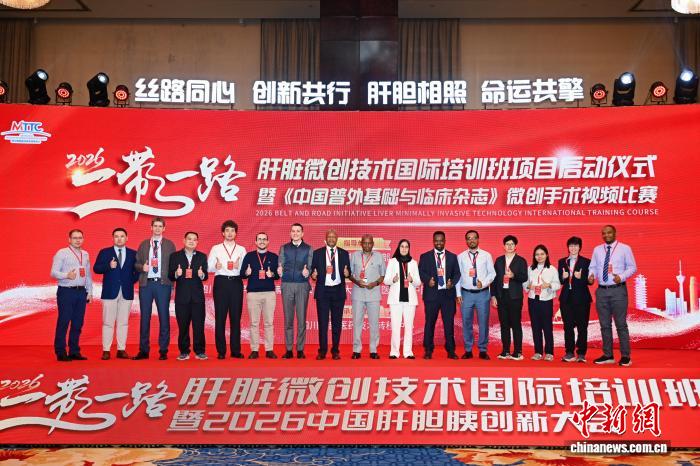
During the visit, the West China Hospital team also proposed a collaboration on remote robotic surgery, reaching a preliminary consensus with their Egyptian counterparts. On April 18, 2026, the “China-Egypt Remote Surgery Center Cooperation Project” was officially launched at the closing ceremony of the Belt and Road Initiative Liver Minimally Invasive Technology International Training Course. In the future, Egyptian patients may no longer need to travel thousands of kilometers to undergo surgeries performed by surgeons from West China Hospital.
Cooperation Still Expanding
On August 7, 2026, the Seminar on Appropriate Experience of China’s Health Development for Belt and Road Countries and the Training Course on Medical Technology and Equipment for China-Aided Hospitals in African Countries, both organized by West China Hospital, Sichuan University, opened in Chengdu. Egyptian doctors were once again on the training roster.
At the opening ceremony, 31-year-old Egyptian doctor Nasha Ibrahim sat quietly in the audience. It was her first time in China, and she felt both excited and nervous. West China Hospital of Sichuan University was a name she had long known in the medical community. “As soon as I saw the registration notice, I applied. In the end, I was the only one selected, and I was thrilled about it,” said Nasha Ibrahim.
Nasha Ibrahim’s professional background differs from that of most clinicians. She previously worked in healthcare administration at the Egyptian Ministry of Health and Population and was later transferred to the Public Relations and Health Communication Office of the Faculty of Medicine at Alexandria University, where she was responsible for doctor-patient communication and institutional branding. During this trip, she was most looking forward to the clinical application of a modern hospital management system—from imaging-assisted diagnosis to surgical decision support—and she wanted to see firsthand how these technologies are implemented.
The week-long training was incredibly fruitful for her. The trainees visited the clinical departments and frontline units of West China Hospital to observe the operations of a modern hospital management system and witnessed the application of high-end Chinese medical equipment in real-world settings. This allowed Nasha and her international peers to gain a multi-dimensional understanding of the development path and latest achievements of China’s healthcare sector. At the end of the program, Nasha said, “Every day of learning at West China Hospital made me feel the trip was well worth it. The week passed all too quickly, and I hope for more opportunities to collaborate in the future.”
This mutual commitment has found resonance at both ends of the bridge. Crossing the Mediterranean and spanning the Asian continent, this lifeline continues to extend.
Edited by Zhang Yuanlin
Source: HELLO Chengdu

