




Welcome to gochengdu.cn!
You need to accept our privacy and cookie policy to continue to browse our website. You can change your cookie settings through your browser.

“Autumn has already arrived, so why is it still so hot?” The Beginning of Autumn does not necessarily mean cooler temperatures. This essential heat illness prevention guide covers everything from prevention to first aid. Be sure to bookmark and share it.
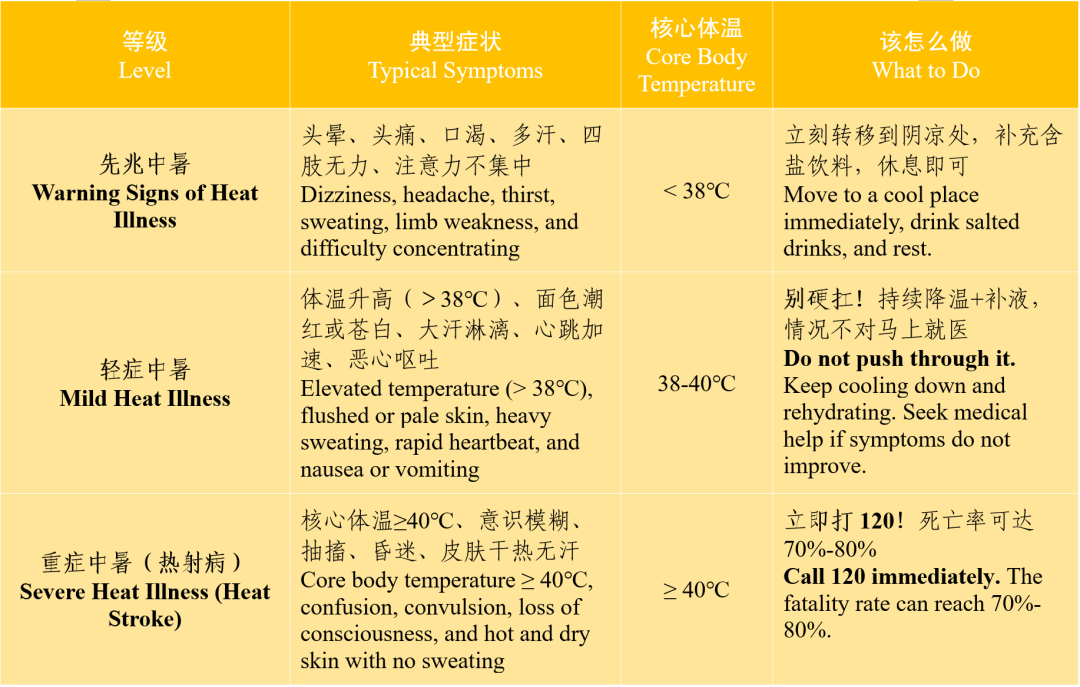
Important Note: There are two types of heat stroke: Exertional heat stroke affects outdoor workers and athletes, while classic (non-exertional) heat stroke is more insidious and can affect the elderly, infants and toddlers, and people with chronic conditions in stuffy indoor environments. Even if you stay indoors, you may still be at risk if the room is poorly ventilated and lacks air conditioning.
Rule 1: Stay Hydrated—Do Not Wait until Thirst Sets In
It is recommended to drink water frequently in small amounts on hot days. When sweating heavily, drink lightly salted water or sports drinks—drinking only plain water may lead to a “lack of salt” in the body. Refrain from drinking iced beer or high-sugar beverages, as they can worsen dehydration.
Rule 2: Avoid the Hottest Hours
The hours between 10:00 and 16:00 are the hottest period of the day, during which outdoor activities and work should be avoided. For necessary outdoor activities, wear light-colored, loose-fitting, breathable clothes made of cotton-linen fabric and wear a wide-brimmed hat and sunglasses.
Rule 3: Set Home Air Conditioner to 26-28℃
It is advisable to set the air conditioner to 26-28℃, avoid direct airflow on the head and neck, and open windows regularly for ventilation. Do not leave children or pets in a parked car with the engine off, as the temperature inside can rise to life-threatening levels within just a few minutes.
The core principles of first aid for heat illness include quickly removing the affected person from the hot environment and immediately beginning continuous physical cooling. Follow these four steps:
1. Remove from the Hot Environment
Quickly move the patient to a well-ventilated, cool area or an air-conditioned room (set the room temperature to 16-20°C), lay them flat, and loosen their clothing and belt.
2. Cool—Most Critical Step
The first 30 minutes after heat stroke onset are the critical window for cooling. The goal is to lower the core body temperature to below 39℃ within 30 minutes.
On-site cooling methods include:
Wiping with cool water and fanning: Wipe the entire body with cool water while fanning to speed up heat dissipation.
✅ Applying ice packs: Wrap ice packs in a thin cloth and place them on the neck, armpits, and groin.
✅ Immersing in cold water (for severe cases): Immerse the patient’s body below the neck in water at 20-26℃.
Avoid wiping large areas of the body with alcohol, placing ice packs directly on the chest or abdomen, or taking ibuprofen or other fever medicines without medical advice.
3. Replenish with Electrolytes
If the patient is conscious and not vomiting, give small amounts of electrolyte-containing fluids frequently (< 100 ml each time). Do not give water to confused or vomiting patents, as it may cause choking.
4. Transfer to a Hospital by Dialing 120 Immediately
Call 120 immediately once beginning cooling measures. Continue physical cooling during the transfer and pay close attention to the patient’s condition.
International Visitors Can Access Medical Care with Ease in Chengdu
The Third People’s Hospital of Chengdu provides professional English-language services and has treated patients from France, the US, Germany, and other countries.
The hospital operates the International Medical Clinic and the International Medical Center, which provide full-process, standardized diagnosis and treatment services for international patients. 24-hour bilingual health consultation hotline: 028-61312288.
Edited by Zhang Yuanlin
Source: Home in Chengdu

