




Welcome to gochengdu.cn!
You need to accept our privacy and cookie policy to continue to browse our website. You can change your cookie settings through your browser.

Recently, a thin mist drifted over the ridges of the Longquan Mountains, where long, glossy olive leaves swayed gently in the mountain breeze. As far as the eye could see, olive saplings spread out in orderly rows across the undulating terrain.
This is the Guanyinshan Olive Planting Base in Jintang County, a vital component of the featured economic forest within Chengdu's Park City Longquan Mountain Ecological Protection and Restoration and National Reserve Forest Project.
Standing on the slopes of Guanyinshan in Jintang County, the newly planted olive trees thrive in staggered patterns, with many saplings already reaching a trunk diameter of 3 to 5 centimeters. After two years of careful maintenance, the initial seedlings have grown into well-formed young trees.
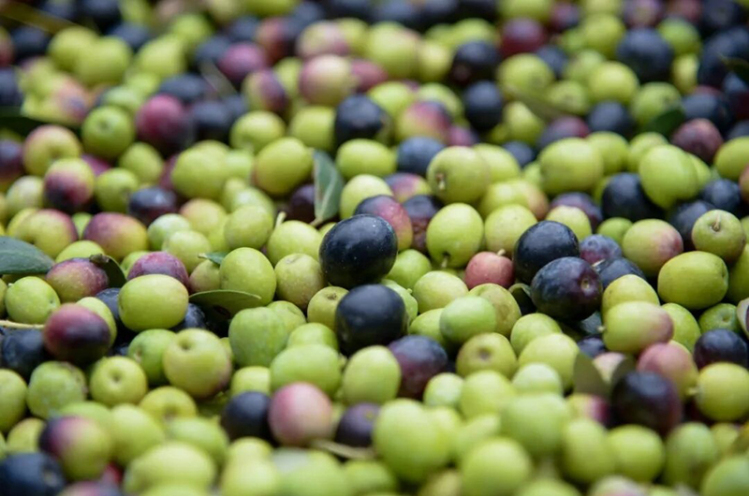
Olive Fruits
To date, Jintang County has completed the planting of nearly 3,000-mu of olive trees, with approximately 100,000 olive saplings established. In the two major planting areas of Guanyinshan and Laibaotuo in Jintang County, the landscape of new olive forests is beginning to take shape.
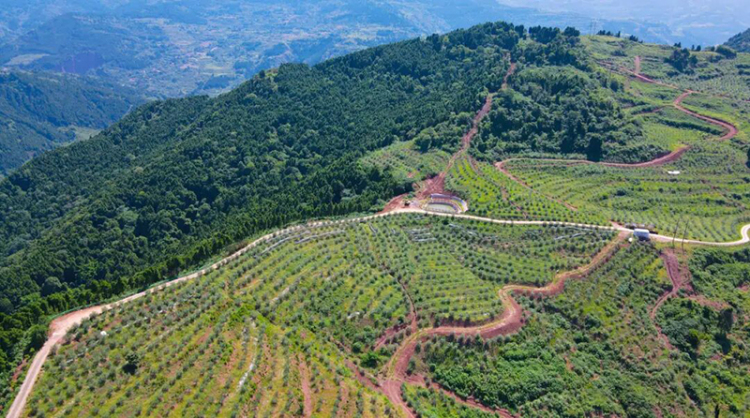
New Olive Forest
Jintang olives have received the National Agricultural Geographical Indication certification, cementing their status as a hallmark of the local specialty agriculture. Once the 6,000-mu olive reserve forest base is fully completed, the Jintang Area of Chengdu Longquan Mountain Urban Forest Park will feature a larger-scale economic forest landscape, achieving mutual improvements in both ecological and industrial benefits.
In the future, the verdant olive green will blanket the Jintang Area of Chengdu Longquan Mountain Urban Forest Park. This green forest expanse will not only serve as an ecological shield protecting Chengdu but also act as a 'green bank' driving local development, continuously providing industrial momentum for the construction of the Park City's Longquan Mountain area.
Edited by Zhang Yuanlin
Source: CRI Online

